Overview
The meeting organised by the IHA Environmental Humanities Working Group on 26 March 2026 at the Royal Irish Academy gathered scholars and early career researchers (ECRs) from universities across the island of Ireland. The workshop , led by the Working Group co-chairs, Dr Marc Caball and Dr Leah O'Hearn explored the intersection of ecological issues and methodologies, such as (but not limited to): food discourses, ecocriticism, farming, literary imaginaries, the creative arts and sustainability policies. The overarching concern was threefold: sustainability, representation, and the communication of knowledge to policy makers.
A central question animated the discussion: how does knowledge travel across and between academic disciplines and areas of society? By examining formal and informal channels, literature and the arts, as well as data and scientific output, the group reflected on how different modes of knowledge-making shape public and political understanding of environmental challenges, as well as how ECRs partake in such transfers and interactions.
Key Themes from Roundtables
Narratives, Policy and the Role of the Environmental Humanities
Participants agreed that politics and economics are fundamentally reliant on narratives and that these narratives translate directly into policy. The humanities are thus well positioned to partake in policymaking, yet this potential is frequently undervalued. Current discourses around sustainability have been narrowed to defeatist framings such as “no alternative” or limited to “reverse engineering,” leaving little room for imaginative futures. The group emphasised the need for a “slow revolution” — one that pays greater attention to history and resists the urgency of short-termism. It was noted that we already possess many of the solutions required for sustainability and that the core challenge is one of political will, which is itself a matter of narrative.
Storytelling and Interdisciplinarity for Sustainability
The centrality of storytelling was also considered from a disciplinary angle with mentions of anthropology, journalism, communication studies, and literary studies, all agents of environmental communication. Interdisciplinarity emerged as essential for engaging policy makers effectively. However, the gap between communities, policy makers, and engineers was noted as a persistent structural problem. Furthermore, current approaches to environmental crises tend to be more top-down than collaborative, which limits both efficacy and legitimacy. Telling and reframing stories requires financial and infrastructural means, which often lack, a tension the group was keen to acknowledge.
Research, Pedagogy and Careers in Environmental Humanities
The conversation surfaced a number of structural challenges familiar to ECRs working in environmental humanities, such as the absence of formal training in ecopedagogy and ESD, the difficulty of developing and sustaining networks and collaborations in an underfunded sector, and the persistent divide between the hard sciences and the Arts and Humanities. Participants also observed that there are fewer teaching opportunities in environmental humanities due to a general lack of ecology-centred modules in the curriculum.
Nevertheless, the group identified a range of opportunities for ECRs: for example, the lack of ecology modules was reframed as an opportunity for ECRs to lead on curriculum development and teaching. Participants also noted that opportunities need not be confined to teaching directly: broader engagements can build relevant competencies. For instance, existing projects include working and reading groups that cut across departmental boundaries, and there was enthusiasm for the possibility to establish a multi-institution network to sustain connections beyond individual schools and institutions. Overall, ECR-to-ECR support was highlighted as particularly valuable, but participants emphasised that permanent staff have a responsibility to advocate for greater opportunities for ECRs and that hiring practices must move towards less precarious contracts and improved working conditions. ECRs were encouraged to embrace their political voice and to advocate for themselves, their scholarship and their careers. More specific proposals included leveraging college sustainability policies to lead on the curriculum development and raising Heads of Discipline’s awareness regarding the need for teaching collaborations across disciplinary lines.
Art, Fiction and the Imagination of Futures
Fiction and artistic practice stood out as vital tools for imagining alternative futures and challenging the “game-over” attitude. The group discussed how artistic practice — including film, data visualisation, and digital platforms such as TikTok — can communicate complex environmental messages to broad audiences. Particular attention was paid to the need to move beyond “doom-and-gloom” framings. Art and humour were seen as means of manifesting positivity. The following communication strategies were also raised:
- Targeting audiences who are “malleable,” rather than those who are still sceptical about climate change;
- Using humour and accessible artistic forms to draw audiences in;
- Creating complex but visually compelling communication (e.g., a dense message on an arresting poster);
- Leveraging TikTok and social media to showcase artistic and environmental practice;
- Targeting all demographics, rather than placing the weight on children and young adults alone.
Access, Voice and Representation
The question of who gets to tell environmental stories was raised with urgency. The group discussed the situation of displaced people and refugees, including those living in squats and tents in Dublin, and asked: how to make their voices heard? The potential for the arts to document and bear witness to refugee and displaced lives appeared as an important and under-explored area. The lack of counter-cultures in Ireland was noted, as were shifting borders, the tensions between apathy and empathy, and the structural forces of capitalism and individualism that constrain both expression and action.
Land Community and Ecological Memory
The Irish attachment to land was raised as a culturally specific resource in Ireland. Examples discussed included the tradition of communal harvest and the practice of reading geological layers in boglands. The group raised the case of peat extraction as a concrete policy dilemma: how do we transition away from ecologically damaging industries without fragilizing communities built around them? Hydroculture and farming practices were also discussed, alongside the connections between ecological knowledge, linguistic heritage, and community identity.
Panel Presentations
Dr. Maureen O’Connor (UCC, Department of English)
Dr. O’Connor opened with a reflection on employment precarity, noting that difficult conditions do not preclude meaningful achievements. She spoke of the importance of personal connection to one’s research as a source of endurance in the face of the ongoing tensions of the job market.
Dr. O’Connor then told the group about her first publication, released during her PhD: an essay on chickens and hens in Nathaniel Hawthorne’s literature, which acted for her as an entry point into research on the more-than-human world. She observed that animals in literary texts used to be overlooked in curricula; yet, they are both humorous and serious in equal measure, offering a form of entertainment that is essential to sustaining engagement. Dr. O’Connor went on to found a network in Animal Studies. She noted a historical dominance of North American scholarship in this area at the time, welcomed the now-existing diverse perspectives on this area, and described the challenges of drawing scholars into what can feel like a strictly literary conversation.
Dr. O’Connor then turned to posthumanism, ecocriticism, and the role of humour through several examples:
- Donna Haraway’s concept of "the Chthulucene" and its embrace of a joyful mess;
- Jane Bennett’s Vibrant Materialism: A Political Ecology of Things;
- Joseph Meeker’s The Comedy of Survival and its argument that nature reveals organisational principles akin to those found in comedy;
- Elizabeth Bowen and Patrick McGinley as examples of comedy, queerness, and the nonhuman in Irish literature;
- Theodore Adorno on the rational, the irrational and fascism;
- Timothy Morton’s description of ecology as “the latest in a series of humiliations,” inviting humility and endurance.
Dr. O’Connor closed on an optimistic note, observing that the liveliness and dedication of the assembled ECRs gave her great hope, reaffirming the need for a community that extends beyond departmental boundaries. Art, she concluded, is a powerful vehicle for communicating urgent messages — particularly through humour.
Professor Michael Cronin (TCD, Department of French)
Professor Cronin began with a question: why does it matter to do ecocritical work in Ireland? He located his own entry point into ecological thinking in a wet field in Wexford in 1978, at the site of a proposed nuclear power station, where he encountered activists from across Europe. This formative experience introduced him to the theorist André Gorz and initiated a lifelong engagement with left thinking and ecology.
He described how this interest resurfaced through work on Irish tourism with Barbara Connor, which generated significant pushback from the industry — illustrating that critical work in this area creates friction.
Professor Cronin then traced his scholarly development through work on Quebec literature, linguistic and cultural diversity, as well as on the politics of globalisation. He argued that globalisation scholarship and discourses have systematically ignored language, particularly the situation of politically exposed and linguistically minoritised communities. Leaning on Luisa Maffi’s concept of “biocultural diversity,” he integrated ecological and linguistic thinking, leading to the introduction of Eco-Translation: Translation and Ecology in the Age of the Anthropocene a book in which he examines how we translate between radically different entities — human and non-human, large and small, central and peripheral. Other key frameworks discussed included:
- Pascale Casanova, macro- and micro-cosmopolitanisms;
- Rosi Braidotti’s shift from vertical constructions of subjectivity to horizontal, lateral relationships (The Posthuman);
- The translational paradigm as i) a means of negotiating sameness and difference, ii) a way of engaging with radical alterity;
- Interspecies communication and bio-semiosis as forms of translation;
- Gilles Deleuze’s Desert Islands and the ontological precariousness of island existence, with its ecological and cultural consequences.
Professor Cronin described how his book on eco-translation was written in response to the absence of the Irish language from Ireland’s first climate action plan. He noted that the language which had described the Irish ecosystem for over two millennia had been entirely evacuated from official discourse. He reflected on the importance of books in which a text is published in two languages with divergent texts rather than direct translation, since – he argued – languages have a right to degrees of opacity.
He closed with four recommendations for researchers in environmental humanities:
- Bring genuine outrage. It is necessary to be bothered by environmental and social injustice for motivation to keep feeding the work.
- Take language seriously. Language is not merely instrumental. Its cognitive, persuasive, poetic, and playful functions are central to global warming, and yet, only 4 per cent of research funding currently supports work on language.
- Develop counter-mythologies and counter-narratives. Identify which stories work in the present moment and find ways to make environmental language attractive rather than dispiriting.
- De-colonise and de-anglicise the curriculum. Engaging with Irish and other minoritised languages opens access to thought that does not otherwise enter our cognitive field. Broadening regimes of attention is a political and intellectual necessity.
A full report will be published including observations by attendees during table discussions.

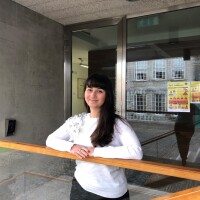
Céline Thobois-Gupta is a PhD researcher and Teaching Fellow in the Department of Drama at Trinity College Dublin. Her research investigates the interactions between the human, the environment and technology in Samuel Beckett’s Drama. Céline has co-edited the Anthropocene issue of the Journal of Beckett Studies and Samuel Beckett and Ecology. She is a co-convener of the Beckett Working Group at the International Federation for Theatre Research with James Little, and she has also worked as translator and dramaturgy with the Beckett Laboratory, Pan Pan Theatre and Dead Centre. Céline is the founder of the “Beckett Beyond” Zine Series and the pedagogical “Beckett Bridge” project.
Published: 7 Apr 2026 Categories: Environmental Humanities, Emerging Scholars, Event review